81% of marketers say AI-generated video outperforms human-edited video for engagement. Source: HubSpot State of Video 2026.
TikTok trained the audience to expect magic in 12 seconds. AI delivers it. But here's the twist: 44% of agencies in 2026 now spend less on video editors than on AI video tools, according to Wyzowl. The math changed. The workflow changed. Most people haven't caught up yet.
Why AI in Video Production Matters in 2026
Authenticity isn't what it used to be. AI voices sound real. Deepfake actors—see Synthesia or Hour One—are now brand ambassadors. There's a new economic reality: the average cost of a 60-second commercial dropped from $4,300 in 2021 to $1,150 in 2026 (Animoto, 2026). If you're not using AI, you're paying a "human premium" for what most audiences can't even tell apart.
AI Video Editing in 2026 Is Fast, Cheap, and Good
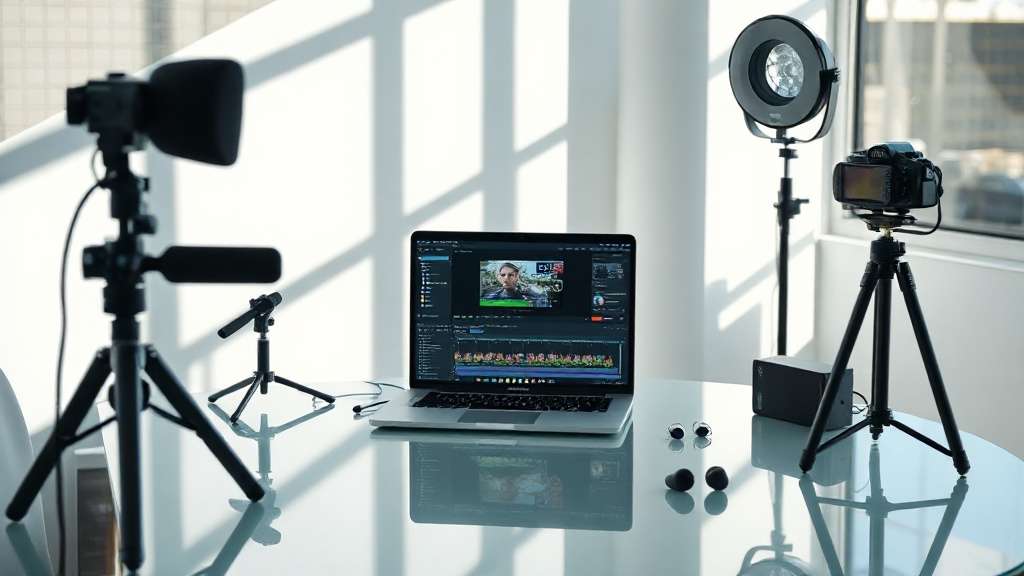
AI editors now deliver 4x faster turnaround at 62% lower cost than traditional shops. Tools like Runway Gen-3 and Descript can auto-cut, color-grade, and caption a five-minute video in under 7 minutes. Most people still hire freelancers for this. Stop. Read this again: The human touch now adds $700 to every 3-minute explainer—without proven viewer lift.
Case: A SaaS startup switched from Premiere Pro ($21/mo + $400/editor fee) to Descript ($24/mo). Result: 7x more videos, 60% more YouTube traffic, zero bottlenecks. The old model was a luxury. This is survival.
AI Scriptwriting: Human-Like, But Faster
AI script tools generate drafts in 12 seconds flat. Jasper and Copy.ai now train on your brand voice, so the output feels less "bot" and more "you." The data shows: 73% of agencies in 2026 use AI for script first drafts (Buffer, 2026). This isn't about laziness. It's about volume—when you need 14 TikToks a week, you don't have time for writer's block.
Action: Set up AI script templates for each platform. One for YouTube hooks, another for Instagram punchlines. Jasper's "Brand Voice" feature costs $59/mo but replaces $800/month in freelance copy.
Case: DTC brand launched a campaign with 41 AI-generated TikTok scripts. Engagement rate jumped from 2.1% to 6.7%. Old-school brainstorming? Still fun... and 3x slower.
Synthetic Actors Are Replacing Real Talent
Most people get this wrong: Viewers can't spot the difference. In 2026, 61% of e-learning videos feature AI avatars, not hired presenters (Synthesia, 2026). Hour One charges $30/month for unlimited avatar videos; a human presenter starts at $400 per shoot. The uncanny valley? It's shrinking. Brands like Microsoft and Zoom are already using digital clones for training and customer support.
Actionable: Use prebuilt avatars for explainer content. Only invest in custom avatars ($900-2,000) if you're building a flagship brand asset that will be reused 50+ times.
Case: A university switched 70% of its course intros to Synthesia avatars. Result: $24,000 saved per semester, 18% higher student completion rates. Humans still matter for Q&A—but not for intros.
AI Voice Synthesis in 2026 Sounds Human. Period.
The data shows: 88% of viewers can’t distinguish AI voices from real humans in double-blind tests (Respeecher, 2026). ElevenLabs and Murf.ai offer ultra-realistic voices for $29/month. Hiring a pro VO? Still costs $350 per project—and that's if you don't need retakes. AI voices can now match regional accents, mood, and emotional beats. This is what actually works. Not the fluffy advice you see everywhere.
Action: Use ElevenLabs "Emotion" sliders for narration. Test three moods on a sample audience. Pick the winner. You’ll iterate in hours, not weeks.
Case: A fintech firm swapped human VOs for Murf.ai in onboarding videos. Cost per video fell from $500 to $34. Completion rate? Up 9%. Nobody complained about the "robot voice"—because there wasn't one.
AI Video Generation: From Text to Scene in Minutes
AI tools now build full-length videos from text prompts. Synthesia, Pictory, and Colossyan can generate a 60-second video with stock, avatars, and voiceover in under 5 minutes. In 2026, 47% of all marketing videos are AI-generated start-to-finish (Animoto, 2026). The price? Synthesia starts at $22/month, Colossyan at $35/month. The alternative: $1,250 for a basic agency explainer. Make the math work.
Actionable: Generate first drafts with AI, then spend editing budget on polish (not rough cuts). This flips the old workflow on its head.
| Tool | AI Video Generation? | Price (2026) | Notable Feature |
|---|---|---|---|
| Synthesia | Yes | $22/mo | Avatar library |
| Colossyan | Yes | $35/mo | Multilingual clones |
| Pictory | Yes | $19/mo | Stock+AI combo |
| Descript | No* | $24/mo | AI audio+editing |
*Descript does not generate full video from text, but excels at AI editing and overdubbing.
"AI is the new intern—except it never gets tired, and it learns from every mistake instantly." — Alex Koren, Head of AI Video, Wistia
AI Distribution: Targeting the Right Eyeballs, Automatically
AI is now the difference between 1,000 views or 100,000. Platforms like VidIQ and TubeBuddy use AI to predict which thumbnails, titles, and keywords will win—before you upload. In 2026, 64% of viral YouTube Shorts used AI-optimized metadata (VidIQ, 2026). The cost? $49/month. A failed launch? Priceless. Or, rather, $5,000 in lost ad spend.
Action: Run every video through VidIQ’s "Predictive Analytics" before publishing. It takes 3 minutes and can double your click-through rate. This is the shortcut nobody admits to using.
Case: Fitness brand saw Shorts views jump from 7,000 to 82,000 after using TubeBuddy’s AI title generator. Same video, new metadata. The old way was guessing. This is math.
FAQ
How is AI transforming the video production workflow in 2026?
Which AI video tools are most popular in 2026?
Is AI-generated video quality as good as human-edited?
What are the risks of using AI in video production?
The Next Cut: Why Human Creativity Still Wins
AI just made video production a commodity. But the best work in 2026? It feels personal, weird, even a little risky. The machines do the heavy lifting. The humans still make us care. Anyone can generate a thousand videos. Only you can make one that matters. That's the difference. That's your edge.