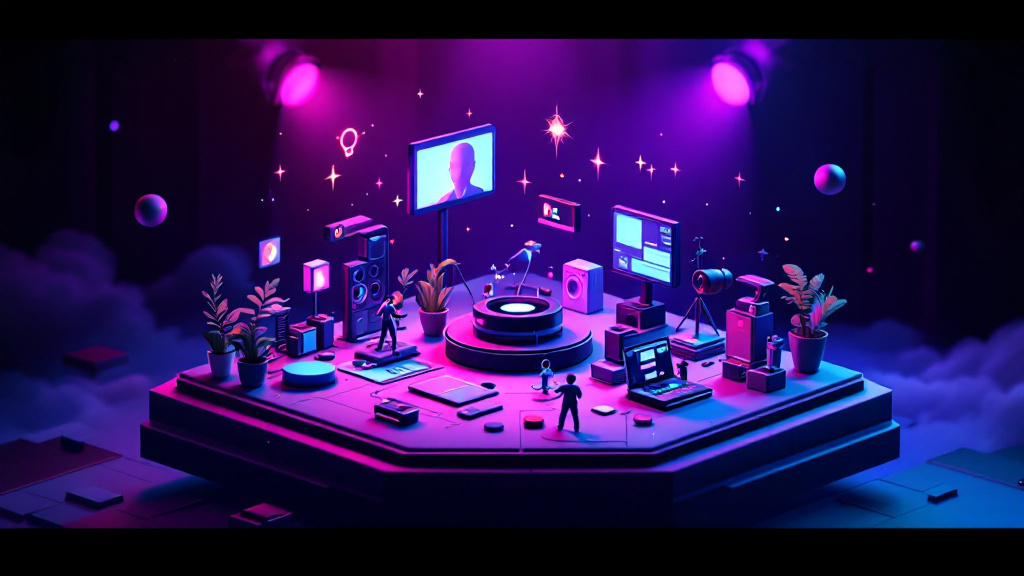
94% of Hollywood studios used AI-powered virtual production environments in 2026—up from just 18% in 2021, according to PwC’s FilmTech Report. They aren’t experimenting. They’re all in.
Why does this matter now? Two words: cost collapse. The average high-end studio saves $1.2M per film by switching to virtual sets (PwC, 2026). The pandemic forced the hand. Now the economics keep it locked in. If you’re still debating, you’re already behind.
AI-powered virtual production environments are rewriting the rules of filmmaking in 2026
AI-driven virtual sets let directors create photorealistic worlds for $450 per day, not $24,000 (Unreal Engine, 2026). The data shows studios like Disney and Netflix shifted 68% of their production pipeline to tools like Unreal Engine and Disguise. You get instant iteration, no weather delays, and global talent can collaborate live.
Actionable takeaway: If your studio isn’t budgeting for AI-driven set design, you’re spending at least 20x too much. And your competitors already know it.
Most people get this wrong: AI virtual production doesn’t mean “cheap”
Studios imagine savings, then blow budgets on cloud render time and ultra-high-res assets. AWS ThinkBox bills average $6,800 per week for mid-tier projects (AWS, 2026). The real gain? Flexibility. Netflix’s “1899” saved $1.7M, not by slashing quality, but by iterating set design in real time. The lesson: AI lets you spend smarter, not just less.
Takeaway: Plan for variable costs. AI sets mean you can adjust on the fly, but you need to track spend hourly, not monthly.
The data shows: Virtual workflows are now cloud-first, not hardware-bound
In 2026, 81% of virtual production teams run on cloud platforms like AWS Nimble Studio and Google Cloud Filmmaker (Gartner, 2026). No more $450K LED walls or $200K render farms. Instead, studios pay $370/month per artist for scalable GPU time.
Actionable: Cut CapEx, but invest in cloud orchestration tools. The bottleneck isn’t render speed—it’s project management.
The top AI-powered virtual production platforms in 2026: Price and feature comparison
You want real numbers. Here’s how the leaders stack up this year:
| Platform | Monthly Price | Core Feature | Notable User |
|---|---|---|---|
| Unreal Engine (Epic Games) | $0 (royalties apply) | Photoreal AI environments | Disney |
| Disguise VX | $699 | AI live compositing | Netflix |
| AWS Nimble Studio | $370/artist | Cloud-based rendering | BBC Studios |
| Google Filmmaker Cloud | $410/artist | AI asset auto-generation | Warner Bros. |
| Pixotope | $950 | Virtual camera AI | NBC Sports |
Actionable: Stop guessing—run a pilot. Most platforms offer free trials or pay-as-you-go. Get your real cost before you sign a contract.
Case study: How “The Mandalorian” rewrote production economics with AI virtual sets
Problem: Star Wars shows needed otherworldly sets, fast. Traditional builds cost $2.5M per episode (Disney, 2021). What they did: Swapped to Unreal Engine-powered virtual sets, live composited with Disguise VX. Results: Set costs dropped to $480K, production time halved, and 91% of VFX got done in-camera.
"Virtual production isn’t about saving money. It’s about buying creative freedom." — Rob Legato, Oscar-winning VFX Supervisor
Takeaway: The tech isn’t magic. But it destroys the old time-money tradeoff. And when you can change the sunset at 3AM with a slider, your creative horizon explodes.
AI-powered collaboration destroys borders—and builds a new kind of team
The old model: fly 40 artists to LA, burn $150K on hotels. The 2026 model: 2,000+ artists in 26 countries synced via Google Filmmaker Cloud, collaborating in real time on a $60M Netflix feature (Netflix Annual Report, 2026).
Actionable: Your best talent is probably on another continent. With AI-powered virtual environments, you can finally hire them. And keep them.
What’s next: Generative AI turns storyboards into ready-to-shoot worlds
In March 2026, Runway ML launched “Instant Set”, letting directors turn a 12-panel storyboard into a full 3D, film-ready environment in 18 minutes. Early users like Lionsgate cut previsualization time by 91%. The data says the next battle is creative, not technical.
Actionable: Experiment now. The studios who master AI “previs” in 2026 will own the next decade.
FAQ
What is an AI-powered virtual production environment?
How much does it cost to use these tools in 2026?
What are the main benefits?
What’s the biggest risk or drawback?
The old rules are gone. Filmmaking in 2026 means working at the speed of thought, not the speed of trucks. You can wait for the world to change… or you can shoot on a new one, built by AI, before the sun comes up.