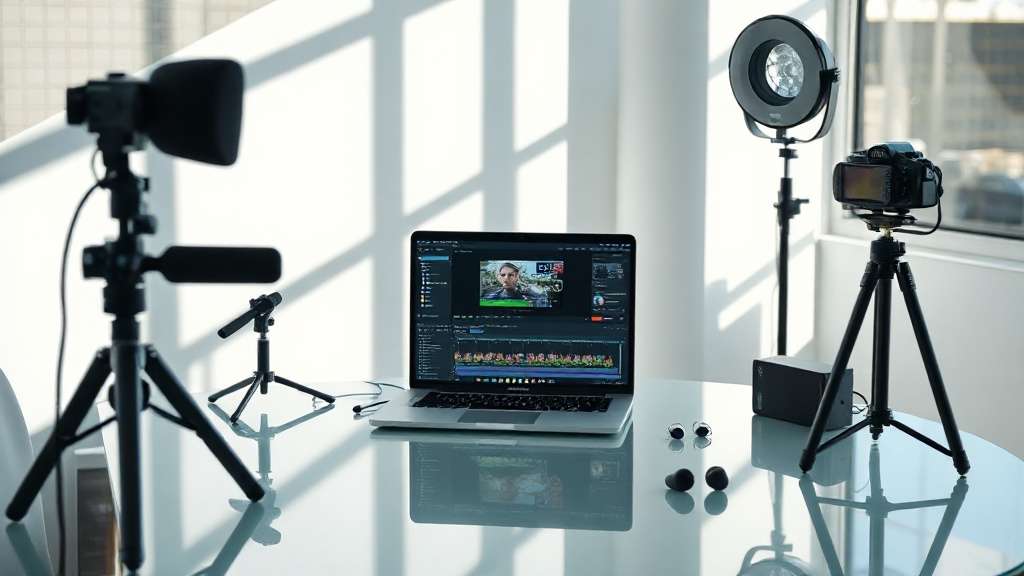
The time required to produce a marketing video has dropped from 13 days to just 27 minutes thanks to AI ([1]).
AI Video Marketing Is Mainstream in 2026
Video marketing has become inescapable. As of January 2026, 124 million people use AI video platforms monthly ([3]). This isn't just a new toy for techies—91% of businesses now use video as a marketing tool, and LinkedIn has become the hub for B2B video ([5]).
The AI Video Generation Market Is Exploding in 2026
The AI video generation market is projected to reach $946 million in 2026, up from $716.8 million in 2025, with a CAGR of 19–20% ([1]). This isn't just headline inflation; it's a fundamental reshaping of video as a medium. Between January 2024 and January 2026, the volume of AI-generated videos surged by 840% ([3]). That’s not adoption. That’s a stampede.
If you’re still producing videos the 2020 way, you’re not just slower—you’re invisible. Enterprise adoption is now the norm, not the exception: 78% of marketing teams use AI video in at least one campaign per quarter ([3]).
Actionable takeaway: If your video workflow doesn't include AI, your competition is moving faster and spending less. This is what actually works. Not the fluffy advice you see everywhere.
Short-Form AI Video Dominates the Content Landscape
Short-form AI video now accounts for 67% of all AI video content produced ([4]). The reason is simple: a significant majority of consumers prefer videos under one minute in length, and 68% say real people make them feel more authentic ([6]). That’s a brutal reality check for marketers clinging to long-form.
Most people get this wrong: They think AI video is best for flashy special effects. In reality, the biggest AI impact is in volume and velocity—delivering snackable, tailored content at a pace no human team can match.
Actionable takeaway: If your video marketing mix doesn’t skew short and personal, you’re missing what actually moves the needle in 2026.
The Cost and Speed Revolution: AI Slashes Production Barriers
AI has reduced the cost of producing a finished minute of video by about 91%, from roughly $4,500 to $400 ([1]). Equally dramatic, AI slashed the time to create a 60-second marketing video from 13 days to just 27 minutes ([1]). This is the kind of progress that turns freelance editors into speed typists.
The old bottlenecks—endless editing rounds, scheduling shoots, praying for good weather—are now software toggles. Small teams can outproduce bigger ones, not with hustle, but with smarter toolchains. The gap between idea and execution has collapsed.
Actionable takeaway: Audit your production pipeline. If you’re paying more than $400 per finished video minute, or waiting more than an hour for a first draft, you are not operating at 2026 speeds.
Emerging AI Video Marketing Platforms to Watch in 2026
The data shows that new platforms are not just hype cycles—they’re fundamentally changing who gets to compete. Here are the names that kept surfacing in 2026 research:
- Veed: An AI-powered video and image editing suite used by Netflix and Google. Paid plans start at $12 per month ([7]).
- Google’s Gemini Omni: Launched in May 2026, this creative AI platform lets users generate and edit video from any input with conversational prompts ([8]).
- Adobe Firefly Quick Cut: Released February 2026, it automates first-draft video edits from raw footage ([9]).
- HIX.ai: Provides AI video, content writing, and coding tools. Paid plans start at $13 per month ([10]).
- Kling 3.0: AI video generation for up to 15-second clips, priced at $0.84 per 10-second clip with audio ([3]).
Here’s the thing nobody tells you: New entrants aren’t just feature lists. They’re price wars. The accessibility arms race means startups can now compete with global brands, and the budget barrier is all but gone.
| Platform | Main Feature | Minimum Price |
|---|---|---|
| Veed | Video/image editing + AI automation | $12/month |
| HIX.ai | AI video, writing, coding | $13/month |
| Kling 3.0 | 15-sec AI video clips | $0.84/10s w/audio |
Actionable takeaway: Test at least two of the above platforms on a live campaign. The price of experimentation is lower than the cost of waiting.
Enterprise Adoption and B2B Video: LinkedIn Takes Center Stage
Most people get this wrong: They assume AI video tools are designed for startups or creators. In 2026, 91% of businesses use video as a marketing tool ([5]), and LinkedIn is now the top platform for B2B video content.
Enterprise adoption is staggering: 124 million monthly users on AI video platforms ([3]). Approximately 78% of marketing teams deploy AI video content in at least one campaign per quarter ([3]). The walls between enterprise and creator tech have all but vanished.
Actionable takeaway: If you’re in B2B, make LinkedIn your AI video testbed. The audience is primed and the bar for innovation is rising by the quarter.
Authenticity, Human Oversight, and the Real Limits of Automation
There’s a persistent myth that AI video is fully automated. The reality is less convenient: while AI can automate editing, cuts, and even script generation, human oversight remains essential for quality and context. Nobody brags about a flawless AI video that missed the point.
The authenticity debate isn’t going away. Despite concerns, research shows consumers still crave real people on camera—68% believe this enhances authenticity ([6]). Ironically, the best AI video often blends synthetic speed with a human face for trust.
Actionable takeaway: Use AI for scale and efficiency, but keep a human in the loop. The winning formula for 2026 is speed plus soul.
The Impact on Creative Teams: Disruption, Not Displacement
The data shows that AI video production is not just for large enterprises—accessibility has leveled the field for small and medium businesses too. But the elephant in the room is job security in the creative sector: Will AI replace editors and motion designers?
Here’s the nuance: AI has automated what was tedious, not what was inspired. Time spent on rough cuts drops from days to minutes, but the best results still require a human touch on story and brand. The creative role isn’t gone—it’s simply moved further up the pipeline.
"AI video has moved from a niche experiment to a mainstream production method, and Pictory sits at the center of that shift, turning scripts, blogs, and footage into finished video at a fraction of traditional cost." — Pictory.ai ([4])
Actionable takeaway: Upskill on AI workflow integration rather than fighting the tide. Creative direction is still a human job, but the toolset is radically different.
FAQ: Emerging AI Video Marketing Platforms to Watch in 2026
Are AI video tools only affordable for large enterprises?
Does AI completely automate the video production process?
How do consumers feel about AI-generated video content?
What’s the most popular type of AI video in 2026?
Closing: The Only Constant Is Change
If the last two years taught us anything, it’s that AI video isn’t waiting for slow adopters to catch up. The stats are clear: lower costs, faster turnarounds, and a tidal wave of new platforms have upended how brands compete in video marketing. The real winners aren’t chasing the old idea of perfection—they’re iterating faster, testing more, and blending automation with real human touch. Forget the fantasy of a set-and-forget AI future. The emerging AI video marketing platforms to watch in 2026 are those that make you faster, sharper, and—when it counts—more human.
Sources
- seedance2-video.com/state-of-ai-video-generation-2026
- morphed.app/stats/ai-video-marketing-statistics
- report-ai.org/indexes/enterprise-ai/ai-video-generation-statistics-2026
- pictory.ai/blog/ai-video-statistics-2026
- pixel8production.com/blog/video-marketing-statistics-b2b-2026
- clipstudio.ai/resources/ai-video-ad-statistics-2026
- techradar.com/reviews/veed-review
- techradar.com/ai-platforms-assistants/googles-new-gemini-omni-ai-can-turn-almost-anyt…
- digitalcameraworld.com/tech/artificial-intelligence/empty-timelines-are-daunting-so-adobe-made…
- techradar.com/pro/hix-ai-review