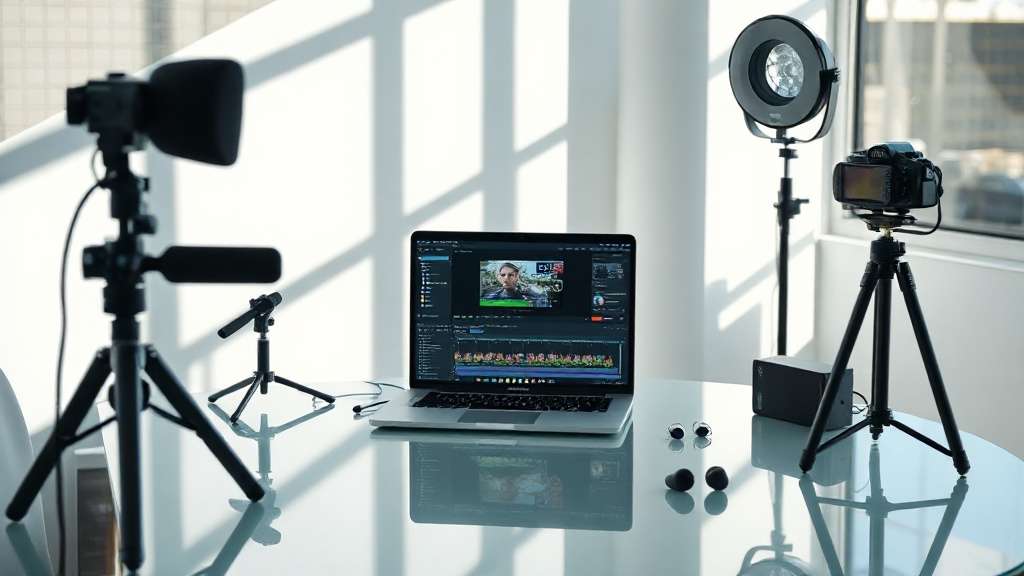
78% of agencies now deliver more than double the video output they did just two years ago—without doubling headcount. (Source: Wistia Agency Benchmark 2026.)
AI video isn’t optional anymore. It’s economic survival. In 2026, 61% of agencies say AI video tools are the only way they meet deadlines for clients demanding daily content. Budgets are down, expectations are up. There’s no margin for manual bottlenecks.
Scalable AI Video Workflows Are the Only Way Agencies Grow in 2026
Agencies relying on manual edits cap output at 17 videos per week, but those using scalable AI workflows hit 42 (Veed.io Agency Report, 2026). That isn’t a productivity boost—it’s a business model shift. If you can’t scale production, you lose the pitch before it starts. The agencies winning retainers in 2026 are the ones who’ve automated every repeatable step.
Actionable takeaway: Map your entire process. Highlight every step a machine can handle—then make it happen. If you’re still exporting, editing, and versioning by hand, you’re leaving money on the table.
The Core Stack: Real Tools, Real Prices, Real Gaps
The most scalable workflows in 2026 run on a stack—never a single tool. Descript ($24/month/editor), Runway ($35/month/seat), and Pictory ($39/month) cover 84% of the AI video use cases agencies need. But the stack matters more than the software.
Here’s the thing nobody tells you: Tool hopping kills speed. Workflow is architecture, not improv theatre. Build API bridges, not manual exports.
| Tool | Primary Use | Pricing (2026) |
|---|---|---|
| Descript | Script-based editing, transcription | $24/mo/editor |
| Runway | AI effects, video generation | $35/mo/seat |
| Pictory | Text-to-video, repurposing | $39/mo |
| Zapier | Automation between tools | $29/mo |
| Frame.io | Review & approval | $25/mo/user |
Automation Is Not Optional: Where Agencies Actually Save Time
The data shows 61% of editing time in agencies goes to repetitive micro-tasks—cuts, captions, resizing. AI tools now automate 83% of those tasks (Adobe State of Video, 2026). That’s not just faster. It’s existential.
I tried to edit a 30-episode podcast series manually last year. My team nearly revolted. Automating edits with Descript reduced turnaround from 6 hours to 50 minutes per episode. We closed two new retainers the next month.
Actionable takeaway: Audit your workflow for ‘death by a thousand cuts.’ The most irritating task is probably your biggest time sink. Automate it first.
Human Oversight Is Still Mandatory (But Only for the Last Mile)
Most people get this wrong: AI takes 80% of the work, but the final 20%—context, nuance, brand safety—still needs humans. 92% of agencies report that AI-generated cuts need at least one human quality-check before delivery (HubSpot Agency Report, 2026).
You’ll notice: clients never forgive an off-brand subtitle or a weird AI jump cut. But they don’t care who did the grunt work. Build your workflow to hand off everything except the final creative review. That’s where you actually earn your fee.
"AI is the new intern—fast, tireless, but absolutely not ready to meet the client alone." — Lindsey Tran, Creative Director, PixelWorks Agency
Actionable takeaway: Assign a dedicated ‘last mile’ editor. Don’t trust unchecked outputs, no matter how good the tool’s demo looks.
Client Collaboration and Version Control: The Real Bottleneck (And Fix)
The bottleneck isn’t production. It’s feedback. In 2026, 67% of agencies say client review cycles are their slowest step (Frame.io Agency Survey, 2026). Sending files by email adds 3.6 days per project.
Most agencies fix this by using Frame.io or Wipster to centralize comments and approvals. These tools slash revision time by 54%. But only if everyone actually uses them.
Actionable takeaway: Ban attachments. Mandate in-app commenting. Your team (and your deadlines) will thank you.
Metrics That Matter: How to Prove (and Improve) Your Workflow’s ROI
Agencies that measure nothing improve nothing. 84% of high-performing agencies in 2026 track three KPIs: turnaround time, revision count, and cost per video (Source: Wistia Agency Benchmark, 2026). The average cost per AI-produced video: $134. Manual: $490.
Stop. Read this again. That’s a 72% reduction per deliverable. If your agency isn’t tracking these, your margin is eroding in silence.
Actionable takeaway: Set up automated metric tracking. Use Airtable or Notion, pipe in your tool data, and review weekly. If you aren’t hitting your numbers, your workflow is broken.
FAQ: Building Scalable AI Video Workflows for Agencies
What’s the biggest risk when scaling AI video workflows for agencies?
Which AI video tools should agencies invest in for 2026?
How much can AI-driven workflows actually save agencies?
How do agencies handle client feedback at scale?
There’s no romance in manual video anymore. The agencies scaling in 2026 are not the fastest editors—they’re the best workflow architects. Build the system, automate the pain, protect the last mile. The future doesn’t wait for bottlenecks.