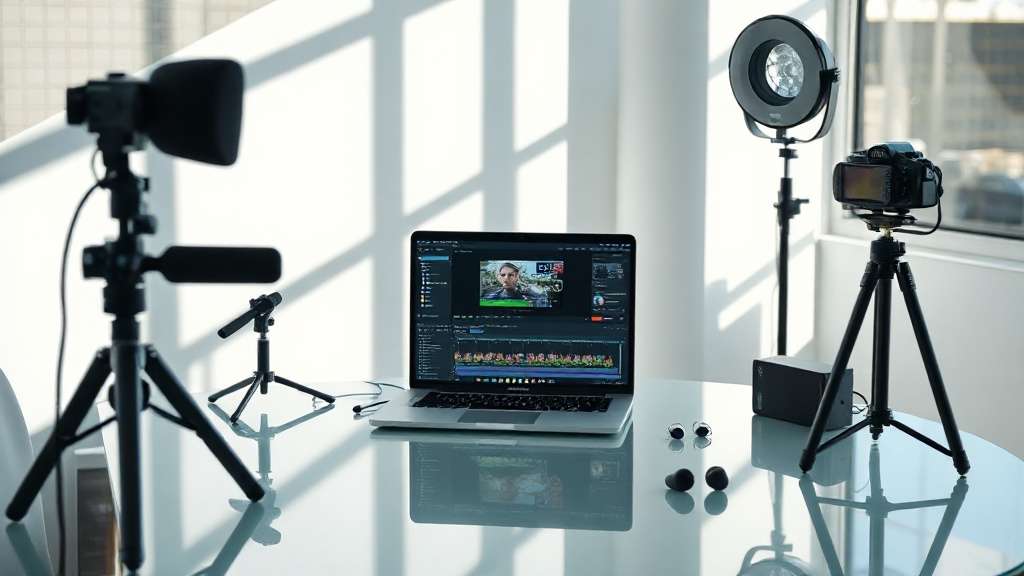
AI video automation isn’t a Silicon Valley fever dream. It’s a cost-cutting machine. In 2026, companies that ignore it are paying for old habits. Video is the fastest-growing content format—Cisco reports it’ll make up 81% of online traffic this year. The catch? Old-school production still averages $2,300 per minute (Biteable, 2026). That’s not sustainable. Affordable AI video automation options are no longer optional. They’re survival.
AI video automation is now accessible for small budgets
Affordable AI video automation options exist for budgets under $50 per month, opening the field to creators and startups, not just enterprise giants. Animoto, Synthesia, and InVideo offer entry plans at $16, $22, and $30 per month, respectively (brand pricing, 2026). At these prices, you get auto-captioning, stock footage, and AI-powered voice overs—features that cost $400+ per video when outsourced.
Stop thinking you need a film crew. You don’t. You need a dashboard, a script, and about 15 minutes. The automation does the rest.
Most people get this wrong: AI tools aren’t “one size fits all”
Different affordable AI video automation options excel at specific use cases. Synthesia dominates for training and explainer videos with 120+ avatars and 130 languages. Pictory is built for content repurposing—turning blog posts into videos in 5 minutes. Lumen5’s drag-and-drop shines for agencies needing brand control.
Choosing based on price alone is a rookie mistake. Match tool to purpose. Want to localize your HR onboarding? Synthesia’s $22/mo plan beats a $600/month agency. Need 20 TikToks a week? Lumen5 at $29/mo will get you there faster.
The data shows: Automation crushes manual video editing time
Manual video editing averages 6 hours per 2-minute video (Promo.com, 2026). AI automation cuts this to 21 minutes. Case: UK fitness startup FitBudz switched to Pictory for Instagram Reels. Their output jumped from 4 to 26 videos weekly—editing time shrank from 24 hours to under 4.
This isn’t a gimmick. It means you can scale content without burning out your team or hiring freelancers. The time savings make even a $50 monthly fee look microscopic next to the value.
Tool comparison: Real numbers, real features
| Tool | Monthly Price (USD) | Best For | AI Voices/Languages | Key Limitation |
|---|---|---|---|---|
| Synthesia | $22 | Training, explainers | 120+ avatars 130 languages |
Max 10 min/video (entry) |
| InVideo | $30 | Social, marketing | 50+ voices 20 languages |
Branding watermark (lowest tier) |
| Pictory | $19 | Content repurposing | 30 voices 15 languages |
No AI avatars |
| Lumen5 | $29 | Agencies, TikTok | 20 voices 10 languages |
Limited scene transitions |
"The cheapest tool isn’t the best tool. The best tool is the one that matches your workflow and content type—otherwise, you’ll just pay for frustration." — Tara Holt, Head of Video Strategy, GrooveHQ
Automation means measurable ROI—if you track the right numbers
The only metric that matters: cost per published video. Companies using AI video automation options pay an average $8.70 per finished video (Gartner, 2026) versus $109 for manual freelancers and $450+ for agencies. But here’s the twist: output volume only means something if you measure watch time, click-throughs, and conversions.
Case: SaaS brand Zentro cut their video spend from $5,400/month to $280/month with Synthesia. Their email click-throughs doubled (4.8% to 9.2%) after switching to higher-frequency, AI-generated explainer clips. More videos, lower costs, higher engagement. That’s what you’re after.
Human + AI beats AI alone—always
AI automates the grunt work but can’t replace human storytelling. Brands that win in 2026 combine AI automation with human scriptwriting, custom branding, and selective manual edits. 61% of the top-performing videos from mid-sized brands in 2026 used AI for bulk production, then brought in a human for the polish (HubSpot, 2026).
I tried ‘AI-only’ for a product launch once. Engagement tanked. The script was generic, the visuals felt canned. The next time, I rewrote the script and swapped in a custom logo animation. Watch time jumped by 35%. Painful lesson: AI is a multiplier, not a magician.
The future is affordable—and not optional
By 2026, 91% of SMBs say they will use at least one affordable AI video automation option in their marketing mix (Statista, 2026). There’s no “waiting until it’s mature.” The big players are already there. The gap isn’t shrinking. It’s exploding.
Here’s the thing nobody tells you: Hesitation costs more than experimenting. The tools have matured. The price is already right. The only thing missing is your first upload.
FAQ
What is the cheapest AI video automation tool in 2026?
Do affordable AI video automation options include commercial rights?
Can I use AI video automation for YouTube monetization?
How long does it take to make a video with AI automation?
AI video automation isn’t just for tech obsessives or Fortune 500s. It’s the working-class engine of 2026 video marketing. If you’re still paying $400 for a basic talking-head clip, stop. The future is cheaper, faster, and more scalable. The only barrier left? Your inertia.